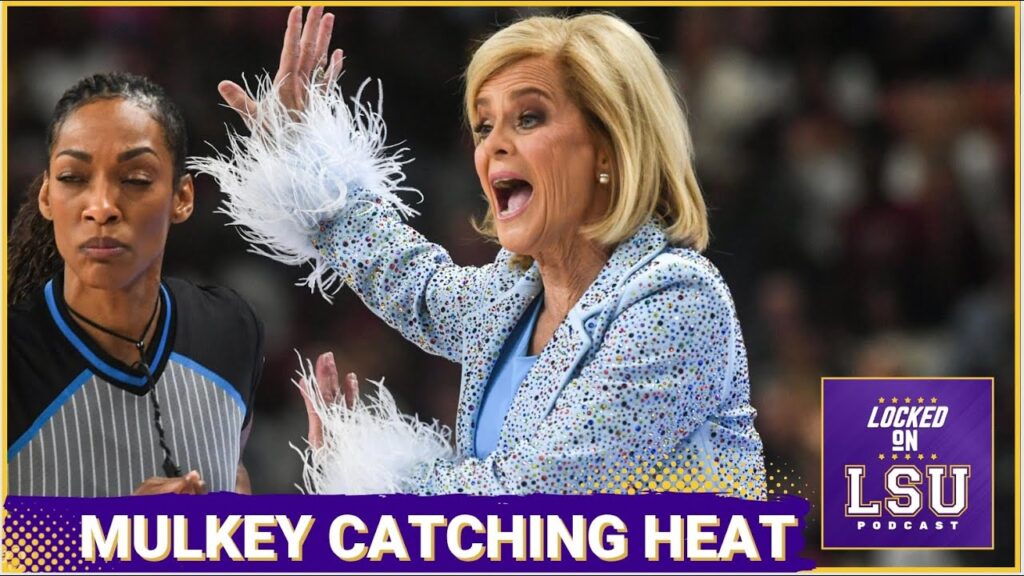
When Michelle Obama famously stated, ““When they go low, we go high,” it was certainly not aimed at Kim Mulkey.
Grace and dignity have never been her strong suits. On the recent occasion, No. 1 South Carolina secured victory over LSU, 79-72, clinching their eighth SEC tournament championship and maintaining their undefeated streak. This game was a rematch following their intense clash in Baton Rouge back in January, where South Carolina managed to secure a tough win on enemy turf, prevailing 76-70.
Both teams are considered the top contenders in the SEC, having claimed national championships in the past. Their mutual disdain for one another is evident, magnified by their coaches’ starkly contrasting personas. It was almost inevitable that the responses from the leading women of these teams would veer in opposing directions following the skirmish that unfolded on Sunday.
“I just want to apologize to the basketball community,” Staley said to ESPN during the post-game interview. “I want to apologize for us playing a part in that, that’s not who we are. That’s not what we’re about.”
Moments after the altercation, which involved a male spectator attempting to intervene by crossing over a barrier onto the scorer’s table, resulting in several ejections and only 11 players remaining eligible from both teams to finish the game, Staley handled the situation with finesse.
Taking full ownership of her team’s actions, she provided context and depth, endeavored to safeguard the reputation of women’s college basketball, and extended apologies to all affected parties, acknowledging that LSU had also expressed remorse.
“We will get better (at) handling situations like this. So, I want to apologize for our South Carolina women’s basketball team,” Staley said on the microphone to the crowd during the trophy presentation. “LSU is a great team. They are our defending national champions. And I won’t be surprised if we’re able, both of us, to represent in Cleveland for the national championship game. I welcome that.”
However, the reaction from Mulkey unfolded in a predictable manner and starkly differed from Staley’s approach.
“It’s ugly, it’s not good, no one wants to be a part of that,” she said after the game. “But I’ll tell you this, I wish [Cardoso] would’ve pushed Angel Reese. If you’re 6-8, don’t push somebody that little. That was uncalled for in my opinion. Let those two girls who were jawing, let them go at it.”
Instead of defusing the tension, Mulkey, a Caucasian woman, exacerbated an already intense situation involving African American women. Her entitlement seemed to overshadow everything, even her ostentatious sideline attire. Her demeanor post-game was so deficient that she publicly admitted to being unaware of certain rules during the press conference, speculating about potential penalties for the coaches.
“But my question is: I don’t really know the rules, why weren’t the coaches tossed if they left the bench? Wouldn’t that be a hell of an ending. But I guess it’s just the players that leave the bench area. I don’t know.”
For those familiar with Mulkey’s track record in women’s college basketball, it comes as no surprise that she has a history of making ill-considered public statements. These instances are not mere lapses in judgment but rather indicative of her character.
With controversies surrounding her lack of support for Brittney Griner and purported discouragement of her players from openly discussing their sexual orientation, Mulkey’s contentious history is well-documented.
She infamously advocated against COVID-19 testing at Baylor and actively sought an invitation to the White House from a president who had shown reluctance in welcoming women’s championship teams to the Oval Office.
The focus should shift from the events that transpired on Sunday to the reactions and rhetoric that followed post-game. When collegiate athletes engage in altercations, it falls upon the adults to embody leadership.
Dawn Staley exemplified the role of a seasoned ambassador of the sport, while Kim Mulkey’s conduct bordered on farce. Brace yourselves, for the NCAA Tournament promises to be immensely captivating. Wishing you a joyous Women’s History Month!